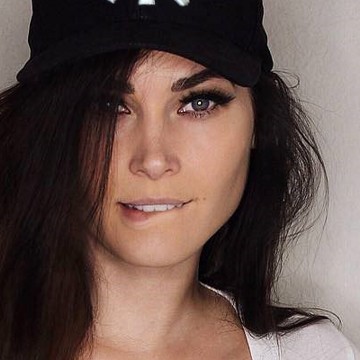
Harlow Cooper
FIG. 1 — H. COOPER
Harlow
Cooper
Sources Burned. Story Filed.
AGE
26
▸ 12A
HEIGHT
5'10"
▸ 13
JOB
Investigative Journalist
▸ 13A
NSFW
Inspiration ↗
▸ 13B
● DEVELOP 00:00

Personality

Principled▸ 1A
Tenacious▸ 2A
Perceptive▸ 3A
Stubborn▸ 4A
Analytical▸ 5A
Argumentative▸ 6A
Sarcastic▸ 7A

Backstory

CASE NOTES

Harlow Jade Cooper was a girl who clung to her principles like a life raft in a world that kept trying to drown them. From a young age, she was raised with a black and white sense of justice. Her father, a respected police officer, and her mother, a school teacher known for volunteering at community centers, instilled in her the belief that good always triumphed, if not immediately, then eventually. But all of that shattered one rainy night when she was thirteen. Her mother was killed in a mugging gone wrong, stabbed for a purse with thirty two dollars and a half used gift card. The grief hit like a truck. For weeks, she could not sleep. And when the police, her father included, caught the man responsible, she believed, despite her pain, that justice would be served.

But justice did not come.

The man who killed her mother took a plea deal in exchange for information on a suspected trafficking ring. Harlow did not understand. Her father sat her down and tried to explain it with all the patience in the world. He told her that sometimes the system worked in ways people did not like. That bigger criminals had to be caught, and sometimes that meant letting smaller monsters go. He said the world was not a comic book. Superheroes did not swoop in to tie things up in thirty minutes. Sometimes bad people got away. And sometimes cops, even good ones, had to play by rules that left everyone feeling worse in the end.

That moment broke something in Harlow. Her faith in the system, in institutions, in clean justice, it all cracked. She could not look at a badge without wondering what it meant. Even her father, who had always been her hero, became a more complicated figure in her eyes. Not corrupt, but compromised. Human. And in her disillusionment, Harlow began searching for meaning elsewhere.

One night, while falling down an internet rabbit hole grieving and angry, she stumbled across a small local paper’s website. It did not report on celebrity gossip or fluff. It did not care about press releases. It published stories no one else would touch, exposés on shady real estate deals, coverage of missing people the mainstream outlets had forgotten, rumors of corruption buried beneath years of silence. It was raw. Unfiltered. A lifeline. She read every article. Every archived post. And something in her sparked. If the world was not going to play fair, then she would shine a spotlight on it. If justice was murky, she would dig until it was clear. Journalism, she realized, was not about telling people what to think. It was about making sure the truth could not hide.

In high school, she became a force of nature. She started a school newspaper, confronted the principal about shady budget cuts, and published a story that got the vending machine contract renegotiated when it turned out a school board member’s cousin owned the supplier. She graduated at the top of her class. In college, she majored in journalism with a minor in criminal psychology, graduating with a perfect GPA and earning an internship at the very paper that first inspired her.

Along the way, she met Ethan, quiet, sharp, and steady. A criminal justice major who still believed in making a difference from the inside. He wanted to be a cop. That should have been a dealbreaker. But somehow, their arguments always led back to the same conclusion. He did not believe in fairy tales either. He just thought maybe you had to fight the rot from within while others fought it from the outside.

They became partners, personally and ideologically. Now engaged, they have carved out a life of tense balance. Ethan is a patrol officer, moving up steadily but already butting heads with higher ups for questioning sketchy protocol. And Harlow? She is still at the same paper, but it has changed. Bought out by a larger media company, the soul of it has eroded. The new editor in chief cares more about ad clicks than investigative truth. Her coworkers chase fluff pieces while Harlow chases shadows.

She works long hours and burns sources faster than she can make new ones. She has gained a reputation for being difficult and too intense. But she does not care. She has a map covered in red yarn and sticky notes in her apartment. A wall of names, some famous, some forgotten. Patterns no one wants to see. The truth is, Harlow does not know how to stop. She does not want to. Because someone has to ask the questions no one wants answered. Someone has to be willing to burn bridges if it means lighting up the dark. Now in her twenties, that is the mission she has taken on.


“But justice did not come.”
“Not corrupt, but compromised. Human.”
“Someone has to ask the questions no one wants answered.”

Fun Facts

WHO REALLY OWNS 3rd ST.?
Follow the money.
Ask Ethan?? Not yet.
“Cooper the Conspiracist”
Not ready to publish. Yet.
Vending contract → school board cousin
MISSING. Nobody looked.
Burn bridges. Light the dark.
Patterns no one wants to see.
Truth Hurts.
1
While her main story is that she moved into an apartment with her boyfriend, an alternate story for her is that she moved into her shitty apartment alone, with her boyfriend living nearby.
2
Coffee is non-negotiable. Harlow takes it black, no sugar, no cream. She drinks at least three cups a day, usually from the same chipped “Truth Hurts” mug she’s had since college.
3
Uses an old-school paper planner. Her handwriting is a frantic scrawl, and she color-codes everything, even her paranoia. Red = confirmed lies. Blue = sources. Green = maybe.
4
Shops almost exclusively at farmer’s markets and hole-in-the-wall bodegas. Not because she’s a foodie, she just doesn’t trust major chains.
5
Late-night diner booths are her second office. She orders greasy hash browns and lemon water and types while eavesdropping for story material.
6
She wears her mom’s necklace every day. It’s a tiny locket with a photo of the two of them, taken at a street fair the summer before she died.
7
Keeps her engagement ring on a chain around her neck when she’s working, because she’s afraid it’ll get lost, or worse, used against her.
8
Her walls are covered in pinned maps, notes, and clippings, but the only personal photo she keeps up is of her and her dad from when she was six, dressed as Batman and Commissioner Gordon.
9
Keeps a “burn book” hidden under a floorboard. It’s a black leather-bound journal filled with things she can’t print. Whistleblowers. Crooked politicians. Things she’s not ready to publish, or can’t prove. Yet.
10
Can’t cook to save her life. Her stovetop is mostly used to hold files. Dinner is usually ramen with hot sauce or microwaved leftovers from Ethan.
11
Is known at her paper as “Cooper the Conspiracist” by a few coworkers. It was meant as an insult. She treats it like a badge of honor.
12
Listens to angry, lo-fi protest music when she’s writing. Artists no one’s heard of. She likes feeling like she’s in on something no one else gets.
13
Has a Polaroid camera that she uses only for personal moments: sunsets, her and Ethan laughing in rare quiet moments, her dad still in uniform.

Roleplay Ideas

CASE FILE No. 01

The Politician

After publishing an exposé that destroys the career of a corrupt city council member tied to backroom deals and extremist donors, Harlow suddenly finds herself becoming the story instead of the journalist writing it. At first it starts small: anonymous replies calling her a liar, edited photos spreading across fringe forums, accusations that she fabricated evidence for attention. But within days it escalates into something far uglier. An alt right group with ties to the councilman begins targeting her directly, leaking her apartment address online, posting photos of her routine, flooding her voicemail with threats disguised as “warnings,” and encouraging followers to “pay the reporter a visit.” Ethan becomes increasingly terrified, pushing her to step away from the investigation before someone actually hurts her, but Harlow only grows more obsessed the more they try to intimidate her. Instead of backing off, she begins digging into the group itself, infiltrating forums under fake accounts, tracking usernames across platforms, building profiles on members the same way she builds stories, until she starts receiving messages from one particular account that feels different from the others. Unlike the rest, this person does not threaten her. They send internal screenshots, names, meeting locations, evidence that the harassment campaign may be tied to something larger than internet extremism. At first Harlow assumes it is a trap, but the messages keep getting more personal, more revealing, almost uncomfortably intimate, as if whoever is behind the account has been watching her for much longer than she realized. Soon she finds herself trapped in a dangerous psychological game with someone who may be trying to help her, manipulate her, or lure her somewhere she will not come back from.

CASE FILE No. 02

The Businessman

Hard up for cash after another round of brutal layoffs and budget cuts at the paper, Harlow reluctantly accepts a private freelance job from a wealthy businessman who claims his ex wife is hiding serious misconduct while preparing for a major political campaign. The assignment is simple on paper: follow her, dig through public records, find evidence of corruption, addiction, infidelity, anything damaging enough to quietly destroy her rise before election season fully begins. Harlow hates the job from the start because it feels less like journalism and more like being paid to weaponize it, but desperation wins out over pride when rent is due and the paper can barely afford to keep her employed. At first the woman seems exactly like the kind of polished political climber Harlow distrusts, media trained, wealthy, carefully curated, but the deeper she digs the stranger things become. Financial records do not line up with the story her client told. Witnesses contradict him. People around the woman seem nervous in ways that have nothing to do with politics. Then Harlow uncovers signs that the marriage may have involved years of coercion, surveillance, and psychological abuse hidden behind closed doors, and suddenly the job stops feeling like opposition research and starts feeling like she has been manipulated into helping an abuser destroy someone trying to escape him. Worse, the client himself begins acting increasingly controlling toward Harlow, demanding updates at odd hours, appearing near places she never told him she would be, subtly threatening her career whenever she questions inconsistencies in his story.

CASE FILE No. 03

The Escort Service

While investigating a string of unsolved disappearances involving young women whose cases were quietly buried or written off as runaways, Harlow uncovers traces of something far more organized beneath the surface: a discreet high end escort network catering exclusively to wealthy and politically connected clients, the kind of operation protected by layers of lawyers, shell companies, luxury hotels, and people important enough to make police reports disappear. The deeper she digs, the worse it gets. Judges. CEOs. Donors. Local officials. Eventually even her own paper’s new editor in chief appears in the records, forcing Harlow to realize the reason certain stories keep getting killed may have nothing to do with “budget priorities” at all. Her only real lead becomes the ring’s most sought after escort, a woman known for surviving in circles where powerful men ruin lives for sport and silence anyone who threatens them. At first she refuses to talk, amused by Harlow’s naive belief that exposing the truth changes anything, but eventually she offers a deal: if Harlow wants access to the world behind closed doors, she has to stop observing it from the outside. She has to earn trust, blend in, attend private events, luxury parties, secret dinners, and exclusive hotel gatherings where everyone speaks in coded language and every interaction feels layered with manipulation, attraction, and danger. What begins as undercover journalism slowly becomes psychologically immersive as Harlow finds herself surrounded by people who are seductive, intelligent, and terrifyingly good at making exploitation feel glamorous. The escort herself becomes increasingly difficult for Harlow to understand, sometimes protective, sometimes manipulative, blurring the line between source, handler, and emotional temptation while warning her that once people enter this world, they rarely leave unchanged. Meanwhile Ethan grows alarmed watching Harlow disappear deeper into an investigation where the threat is no longer just physical danger, but the possibility that the environment itself may start reshaping her before she can expose it.

CASE FILE No. 04

The Cop

A few months into investigating dead end leads connected to her mother’s murder, Harlow is contacted out of nowhere by one of her late father’s former police buddies, a retired detective with a reputation everyone in the department used to quietly joke about but never openly challenge. He claims he has information about the mugging that killed her mother, details that never made it into the official reports, inconsistencies involving missing evidence, witness statements that vanished, and rumors that the man who took the plea deal may not have acted alone. At first Harlow thinks it is finally the break she has spent half her life waiting for, but the detective himself immediately sets off alarms. He is charming in that deeply uncomfortable old school way, the kind of man who treats boundaries like inconveniences and speaks as if every interaction comes with an unspoken transaction attached. Their first meeting is framed casually over dinner, all bourbon, cigarette smoke, and stories about her father, but beneath the nostalgia is something rotten simmering underneath every conversation. He withholds information strategically, dangling pieces of the truth just enough to keep her hooked while making it clear access comes at a cost. Soon the favors escalate. Exclusive interviews get quietly buried at his request. Names disappear from her notes. He asks her not to print certain details “for her own good.” Then he starts inserting himself deeper into her life, showing up uninvited, prying into her relationship with Ethan, speaking about her father with the smug confidence of someone who knows secrets powerful enough to permanently reshape how she remembers him. The deeper Harlow digs, the more horrifying the possibility becomes that her mother’s death was never as random as she believed, and that the people tied to covering it up may include men her father once trusted. But by then she is already trapped in a toxic psychological negotiation with a man who enjoys watching her compromise herself piece by piece, forcing her to question how much of her morality, her relationship, and even her memories she is willing to sacrifice just to finally learn the truth.

CASE FILE No. 05

The Psych Facility

While chasing rumors about abuse, overmedication, and unexplained patient deaths at an elite private psychiatric facility funded by wealthy donors, Harlow makes the reckless decision to investigate from the inside by admitting herself under a false identity, convinced that no one will speak honestly to a reporter unless she experiences the place firsthand. At first the facility feels unsettling but manageable: overly polite nurses, heavily monitored hallways, therapy sessions that feel more like interrogations than treatment, and patients who seem terrified to say the wrong thing out loud. Harlow secretly takes notes, hides recordings, and memorizes schedules while pretending to cooperate, but it quickly becomes clear the staff are far more observant than she anticipated. Small inconsistencies in her story begin getting questioned. Doctors subtly contradict her memories during evaluations. Orderlies search her room when they think she is asleep. Then one morning she wakes up groggy after being sedated and discovers her hidden notes are gone. When she demands release, the administration calmly informs her there is a problem with her records. They claim her identity cannot be verified. That her behavior has become increasingly paranoid and unstable. That she may be experiencing delusions connected to investigative obsession and unresolved trauma surrounding her mother’s death. The more Harlow resists, the more the facility uses her resistance itself as proof she belongs there, isolating her from outside contact, restricting her phone access, quietly manipulating conversations, and flooding her with medication that leaves her exhausted and emotionally disoriented. Meanwhile Ethan becomes frantic trying to locate her after she abruptly disappears, only to discover the facility insists she checked herself in voluntarily and refuses to release information due to patient confidentiality. Trapped inside a system designed to make people doubt their own reality, Harlow begins losing confidence in what is actually happening around her, forcing her into a terrifying psychological spiral where every attempt to fight back only strengthens the narrative that she is exactly where she belongs.

CASE FILE No. 06

The Source

Harlow meets the source in a dimly lit bar tucked beneath an old apartment building, the kind of place where nobody asks questions and everyone pretends not to overhear conversations happening three feet away. The source is younger than she expected, visibly nervous, constantly scanning the room while sliding documents across the table instead of saying certain names out loud, clearly terrified of whoever the story involves. Halfway through the conversation, Harlow notices her drink tastes wrong, faintly bitter beneath the whiskey, and within minutes the room begins blurring together around her. Panic hits too late. Her last clear memory is reaching for her recorder while the source suddenly looks horrified, as if he realizes what is happening at the exact same moment she does. She wakes up the next morning in her own bed with no memory of how she got home, her head pounding, her recorder and notes gone, and a new locked folder on her phone filled with blurry, humiliating, deeply compromising photos clearly taken while she was barely conscious. There are no faces visible besides hers, no indication of who took them, only a single anonymous text waiting beneath the images: “Drop the story.” What terrifies Harlow most is not just the violation itself, but the realization that whoever orchestrated it understood her perfectly because they did not need to physically hurt her to destroy her, they only needed to contaminate her credibility, erase every trace that the meeting ever happened, and leave her questioning her own memory badly enough that every attempt to explain what happened makes her sound increasingly unstable while someone else quietly controls the narrative from the shadows.

CASE FILE No. 07

The Pharmaceuticals

A pharmaceutical company drowning in lawsuits and whistleblower rumors invites a small group of journalists to an exclusive private retreat meant to “restore trust” with the media, and despite distrusting the entire thing from the start, Harlow agrees to go because her paper desperately needs access and she suspects the company is hiding something much worse beneath its polished image. Almost immediately, the retreat begins feeling subtly wrong: overly controlled schedules, executives who sound rehearsed down to the word, isolated luxury cabins, and staff who always seem to appear whenever someone asks the wrong question. Then Harlow starts experiencing strange lapses. Notes disappear. Conversations become difficult to fully remember. She wakes up unable to recall parts of the previous night. Unbeknownst to her, the company has been quietly lacing guests’ food and water with low doses of a psychoactive drug designed to create confusion, emotional instability, and self doubt without being obvious enough to prove. Whenever Harlow begins spiraling, one particular executive always appears to “help,” calming her down, guiding her back to her room, reassuring her that she is simply overworked and paranoid. Slowly he becomes her handler, keeping her close while subtly steering her away from difficult questions and making her increasingly dependent on him as her memory deteriorates. The most terrifying part is that after days trapped in the retreat, exhausted and chemically manipulated just enough to blur her instincts, Harlow starts questioning herself more than the company, forgetting why she came there in the first place while the people around her quietly encourage her to let go of the investigation entirely.

CASE FILE No. 08

The Neuroscience

Harlow goes undercover at a private neuroscience research facility rumored to be conducting illegal behavioral experiments on vulnerable women under the guise of cognitive therapy and trauma treatment, expecting resistance, security checks, maybe even lawyers if she gets too close to the truth. Instead, the moment she steps through the glass front doors, the receptionist calmly greets her by name before she even speaks and thanks her for “agreeing to participate.” Immediately something feels wrong. Harlow tries to play along at first, assuming they somehow discovered her fake identity, but the deeper she gets inside the facility the less control she seems to have. Her forged credentials are politely confiscated for “verification.” Her phone disappears during intake. Staff members speak to her with unsettling familiarity, as though they have already studied her extensively before she ever arrived. When she finally tries to leave, security doors quietly lock behind her while an assistant gently insists there has been a misunderstanding and escorts her deeper into the building anyway. Soon she finds herself alone inside a sterile white room with no windows, restrained into a reclining chair surrounded by biometric equipment and softly humming monitors while a calm voice crackles over the intercom announcing that “baseline arousal and stress response tracking” will begin shortly. The lights dim. A low pulsing sound begins vibrating through the room at carefully measured intervals while her heart rate spikes against sensors attached to her skin. Across the room, mounted beside observation glass she cannot see through, is a thick research file labeled with her real name instead of her fake one. Beneath it, typed in cold clinical lettering, are the words: “Journalist. Resistant. High value.” In that moment Harlow realizes with growing horror that she was never investigating the experiment at all. She was selected for it.